From PMO to Strategy Management Office (SMO): Why Project-Centric Tools Are No Longer Enough
The Project Management Office solved an important problem. As organizations ran more projects, they needed common methods, reliable plans, resource coordination, risk controls, and consistent reporting. The PMO gave management a disciplined way to see whether projects were being delivered.
That mandate has expanded. Executives now expect the same office to help select strategic priorities, connect investment to outcomes, coordinate change across functions, challenge weak initiatives, interpret KPI evidence, and support decisions when assumptions change.
The role has moved closer to strategy. In many organizations, the name and the tools have not.
This creates a structural mismatch. A traditional PMO can improve the delivery of projects without proving that the portfolio is changing the business in the direction strategy intended. Its tools can show schedule, cost, capacity, milestones, risks, and benefits while leaving the broader strategic logic fragmented across slides, spreadsheets, dashboards, and management meetings.
The problem is not that project management has become less important. It is that projects are only one part of strategy execution.
A Strategic Portfolio Is Still a Portfolio
The usual response is to make the PMO more strategic. The office gains a seat in planning discussions, strengthens portfolio prioritization, and asks every project to demonstrate strategic alignment. It may be renamed the Strategic PMO, or SPMO.
This is a real improvement. It moves the conversation from “Are projects being delivered correctly?” toward “Are we delivering the right projects?”
But it can remain project-centric in a deeper sense. Strategy is still viewed through the portfolio. Strategic objectives become categories attached to projects. KPIs become benefit measures. Alignment becomes a score in the business case. Execution evidence is aggregated from project status.
That model works when strategic change can be represented mainly as a portfolio of initiatives. It becomes incomplete when the organization must also govern questions such as:
- Are the strategic objectives still the right ones?
- Do the KPIs provide credible evidence of progress?
- Are business units making differentiated but coherent contributions?
- Are cross-functional dependencies weakening the combined plan?
- Does poor performance require a project intervention, an operational countermeasure, a resource decision, or a change in strategy?
These are not project-governance questions. They are strategy-governance questions.
SPMO or SMO? Let the Mandate Decide
The choice between Strategic PMO and Strategy Management Office should not be treated as a naming preference. The two labels imply different centers of gravity.
An SPMO remains an evolved project or portfolio office. Its primary management objects are projects, programs, portfolios, resources, risks, benefits, and delivery decisions. It strengthens their connection to strategy.
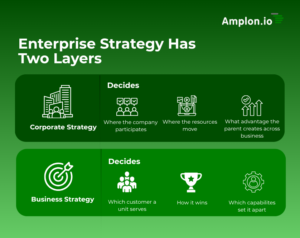
An SMO manages the enterprise strategy system. Its primary objects are strategic choices, long-term and annual objectives, KPIs, initiatives, owners, organizational contributions, dependencies, assumptions, review evidence, and management decisions. Projects remain essential, but they are one mechanism through which strategy is executed.
This is an important difference because an office tends to manage what its system makes visible. If the system begins with projects, strategic management will gravitate toward project selection and delivery. If it begins with objectives and their cause-and-effect relationships, management can ask whether projects, KPIs, and local contributions still form a credible strategy.
For organizations that have genuinely expanded the mandate beyond portfolio governance, SMO is the clearer name. It describes the work without forcing every strategy issue into project language.
That does not mean every PMO should be renamed. A strong delivery-focused PMO remains valuable. An SPMO may be exactly right where enterprise change is managed primarily through major programs. The name should change only when the decision rights, management process, and information model have changed with it.
The Unit of Management Has Changed
Traditional PMO tools are designed around a durable hierarchy: tasks belong to projects, projects belong to programs, and programs belong to portfolios. This is a useful architecture for planning and controlling work.
It is not a complete architecture for strategy deployment.
A strategy system has several connected dimensions that cannot be reduced to the project hierarchy:
- Direction: the few strategic changes the organization has chosen to pursue.
- Outcomes: the long-term and annual objectives that define what should become true.
- Evidence: the KPIs that indicate whether those outcomes are emerging.
- Intervention: the projects, countermeasures, policy changes, capability investments, and resource choices intended to influence the outcomes.
- Contribution: the relationships among corporate, business-unit, functional, and local plans.
- Governance: the reviews, decisions, escalations, and changes that keep the system coherent over time.
Projects occupy only one of these dimensions. A project can finish on time while its KPI does not improve. A KPI can move for reasons unrelated to the linked initiative. A green portfolio can support an objective that is no longer strategically relevant. Two locally successful projects can compete for the same scarce capability and make the enterprise plan less executable.
The SMO must be able to see and govern those conditions. A consolidated project dashboard is not enough.
Why Older PMO Tools Provide Only a Partial Solution
Project-centered tools are not outdated because their scheduling or portfolio features are weak. Many are highly capable. They become partial solutions when organizations ask them to operate a management system they were not designed to represent.
Three gaps are especially consequential.
Strategy Appears as Metadata
In many project systems, strategy is a tag, category, score, or business-case field attached to an initiative. That can show declared alignment, but it does not preserve the full logic among objectives, KPIs, projects, owners, and organizational levels.
The system can answer which projects claim to support a priority. It may not answer whether the combined set of projects is sufficient, contradictory, overloaded, or based on a weak assumption.
KPIs Sit Beside the Portfolio
Project reporting is built around delivery progress. Strategic reporting needs evidence of impact.
Milestones, budget consumption, and percent complete can show whether work is advancing. They cannot show whether customer behavior changed, lead time fell, capability improved, margin shifted, or another intended outcome emerged. Those questions require KPIs to be first-class management objects, explicitly connected to objectives and interventions.
When KPI evidence sits in a separate performance system, reviews often compare two reports rather than examine one causal model. The project is green in one view while the outcome remains red in another. The management team is left to reconstruct the relationship during the meeting.
Reviews Monitor Work Instead of Governing Strategy
A PMO review normally asks whether delivery is on track and what intervention the project requires. An SMO review must also ask whether the project still contributes, whether the KPI changes the interpretation, whether resources should move across the portfolio, and whether execution has invalidated part of the strategy.
That requires a decision history connected to the strategy context. Without it, the organization records project actions but loses why a strategic commitment was continued, revised, paused, or replaced.
The SMO Should Not Become a Super-PMO
Expanding the mandate does not mean centralizing every strategic decision in one office.
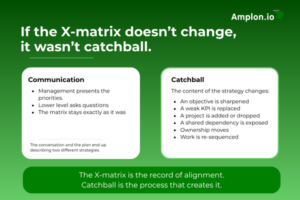
Senior leadership still owns strategic choices. Business leaders still own results. Functions and teams still define credible contributions through catchball. Project managers still own delivery disciplines. KPI owners still explain performance and countermeasures.
The SMO owns the integrity of the management system around those responsibilities. It ensures that objectives are explicit, priorities remain limited, contributions are aligned, evidence is connected to the right decisions, review forums have clear purposes, and changes remain traceable.
Its authority should therefore be architectural and procedural rather than substituting for executive judgment. The SMO makes the strategy governable; it does not become the owner of the strategy itself.
The Tooling Model Should Evolve With the Office
An SMO does not necessarily need to replace detailed project tools. Project teams may still require sophisticated scheduling, resource planning, financial control, or technical workflows.
What it needs is an authoritative strategy layer above and across those systems. That layer should keep objectives, KPIs, initiatives, ownership, alignment, dependencies, status evidence, and review decisions connected. It should allow operational and project data to enter the strategy conversation without turning the strategy model into another project database.
This is where a Hoshin Kanri platform such as Amplon supports the evolved mandate. The X-matrix provides a strategy-centered architecture: objectives define intended outcomes, KPIs provide evidence, projects represent deliberate interventions, and alignment links contributions across organizational levels. Portfolio and project views remain available, but they sit inside the broader strategy context.
The practical test for SMO tooling is therefore not whether it contains more project features. It is whether management can move from a strategic objective to its evidence, interventions, owners, dependencies, lower-level contributions, and decision history without reconstructing the logic across several systems.
FAQs
Hoshin Kanri software is a digital system for managing strategy deployment. It typically connects long-term objectives, annual priorities, initiatives, KPIs, ownership, alignment across organizational levels, and recurring management reviews.
Core capabilities usually include an interactive X-matrix, objective alignment, initiative and project management, KPI tracking, ownership, review dashboards, access controls, and change history. Buyers should also test how these capabilities work together during a realistic management review.
No. The X-matrix represents relationships among objectives, initiatives, measures, and owners. Hoshin Kanri also requires catchball, execution management, review, intervention, and learning. Software should support the wider management cycle.
Use the same realistic strategy scenario for every shortlisted vendor. Include a KPI deviation, a cross-functional dependency, and a decision that changes the plan. Compare how quickly managers can understand the context, make and record the decision, update affected commitments, and recover the reasoning later.
The case becomes stronger when multiple matrices, functions, owners, initiatives, and review cycles create significant reconciliation work or make relationships difficult to maintain. The decision should be based on management-system complexity, not on spreadsheet age alone.

We’ve been using the Amplon X-matrix tool for our 500-person organization over the past two years. It has significantly enhanced clarity. Now, we have an easily accessible clear view for everyone of our long-term goals, annual objectives, and development topics both at the organizational level and within each activity.
Moreover, the Amplon team’s responsiveness and support have been outstanding. Overall, Amplon X-matrix has been an invaluable asset for our organization.
Ari Hyvärinen,
ABB Drives Oy